
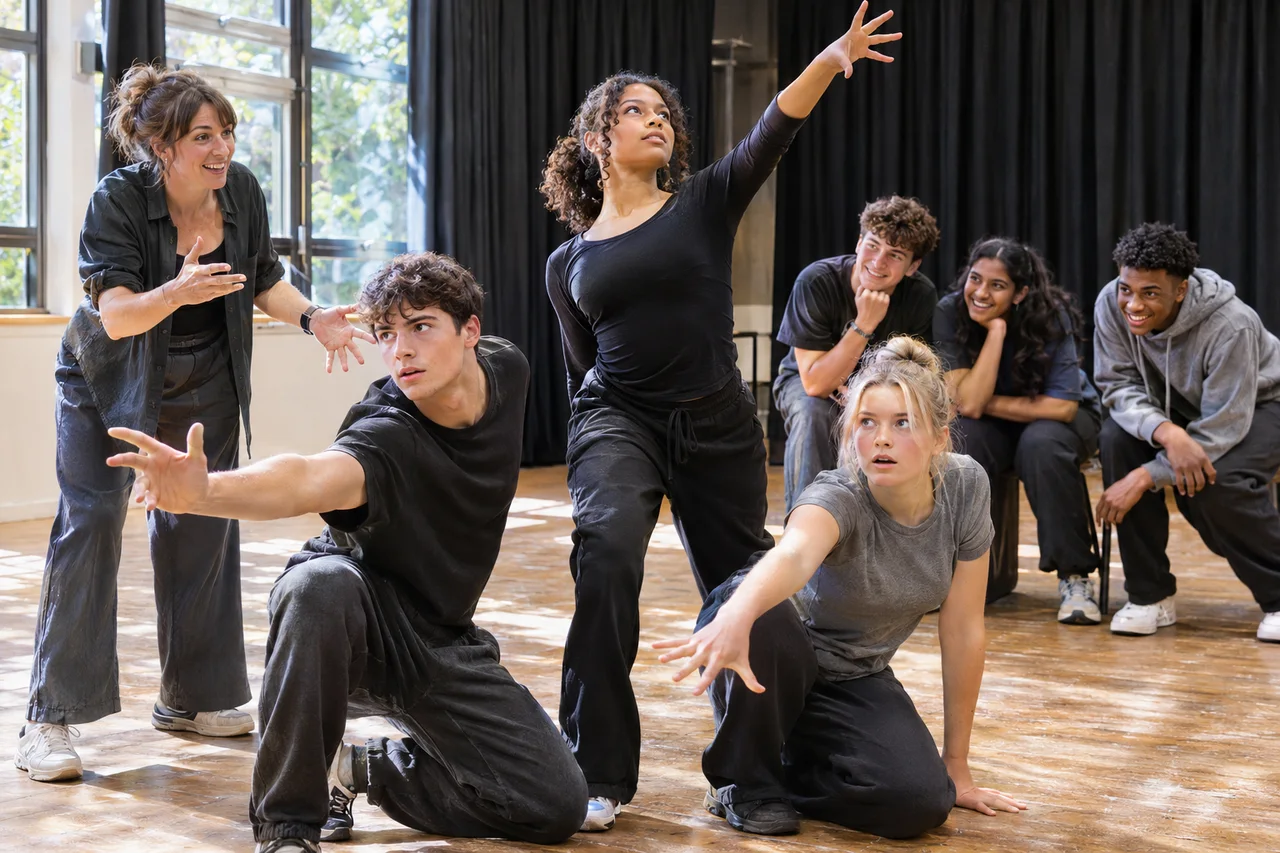
Before booking a drama workshop, look at what your students are doing in lessons. Where are they struggling? What would you like them to try? A visiting practitioner will find it easier to suggest useful work if you can describe a particular problem, rather than simply asking for a workshop on “devising” or “confidence”.
This guide covers what to put in your enquiry, what to check before booking and how to follow up the session in class.
Decide what you want students to practise
Choose one or two things you want help with. For example, a group might generate plenty of material but struggle to decide what to keep. Another might know a practitioner's techniques but use them without considering their effect on an audience. Those are different teaching needs, even if both groups are studying devising.
Describe what you have noticed in rehearsals. “Students keep adding new scenes without developing the ones they have” is more useful information than “they need to improve their devising”. You can then ask whether the workshop could help them select, edit and rehearse a short section.
For more on choosing a focus, see our guide to planning drama workshop learning outcomes.
Write a short brief for the practitioner
You do not need a long document. Include:
- The group: year group, number of students and their experience of drama.
- The current work: the text, practitioner, topic or piece they are studying, and what they have already tried.
- The help you want: a specific skill or difficulty you would like the session to address.
- The arrangements: possible dates, available lesson time, room and budget, where known.
- Participation: any adaptations or staff support that need discussing before the visit.
For example, you could write: “Our Year 10 students are devising in small groups. They have several scenes, but the transitions interrupt the action. Could a workshop help them experiment with different ways of moving between scenes?” This tells the practitioner what to prepare for. It also gives you a clear point to return to when you discuss the session.
Ask for an outline of the session
Read the outline as you would a lesson plan. Can you see what students will do and how it relates to the brief? Look for opportunities to try a technique, receive feedback and use it again.
If the outline says “explore physical theatre”, ask what that will involve. Will students work with their own material or a new stimulus? Will they develop a short sequence? Will there be time to watch each other's work? These questions help you judge whether the session suits your class.
Tell the practitioner if students find particular ways of working difficult. For instance, a class that struggles with open-ended group tasks may need a more structured starting exercise. Agree those adaptations in advance.
Confirm the practical arrangements
Check the session length against the school timetable, including breaks and room changes. Ask about clear floor space, equipment, materials and setup time. Agree what the class teacher will do during the session and complete your school's arrangements for visiting practitioners.
Read the proposal before confirming the booking. If travel, preparation, resources or follow-up are mentioned, check what is included in the quoted fee. Ask about anything the school needs to provide.
Use the workshop in the next lesson
Keep a note of an exercise, instruction or piece of feedback that helped students improve their work. You can use it as the starting point for the next lesson:
- Ask each group to choose a short section of its existing piece.
- Have them rehearse it using one technique from the workshop.
- Watch the revised section and ask the audience to describe what changed.
- Ask the performers which changes they will keep, and why.
For the group working on transitions, this might mean trying two ways of moving between the same scenes. The class can then discuss which version keeps the action clear. That gives you more to assess than whether students enjoyed the visit.
Our guide to applied drama teaching discusses participation and reflection in more detail. There are further teaching guides in the applied drama and theatre in education collection.
Enquire about a school workshop
Clare Buchanan offers bespoke drama workshops for schools, including acting, devising, text and practitioner work. Send the year group, what you are teaching and where you would like help. If the training is for staff, the same page includes teacher CPD and department support.