(ages 13-14) · 6 lessons
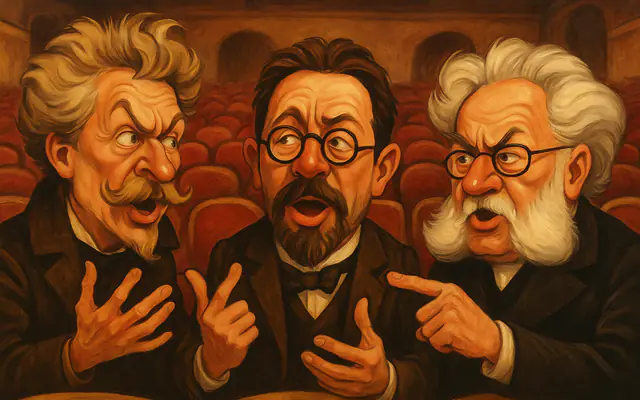
Ibsen, Strindberg & Chekhov
Three theatrical giants and their influences on modern drama

(ages 13-14)
This six-lesson KS3 scheme introduces surrealist drama by linking practitioner methods (Grotowski, Artaud) and Dali-inspired imagery to short performance tasks. Lessons combine image study, printed texts and practical group exercises to develop devising, mime and vocal play. Use the unit to teach physical theatre techniques, playful text work (puns, nonsense) and short performance assessment with simple props and written self-evaluation.
Students learn to apply physical theatre and Poor Theatre principles to spoken and visual texts, create devised scenes using gibberish and mime, explore puns and nonsense poetry, and adapt canonical extracts for surrealist performance. The unit emphasises ensemble devising, text-to-physical translation, vocal experimentation and peer/self-evaluation through short assessed performances.
Introduces students to surrealism via image study and class discussion using the painting 'Hommage'. Practical activities include a 'Consequences' writing starter and devised gibberish and large-scale object scenes performed for the class.
Explores Jerzy Grotowski's Poor Theatre and Laboratory approach and how minimal props focus on actor physicality. Activities include paired 'ball-and-chain' and 'box' ensemble exercises to emphasise physical limits and character feeling.
Applies Grotowski methods to an Ariel speech from The Tempest to examine text and physical expression. Tasks: identify adjectives in the extract, then stage volunteers to support and physically shake the reader to compare readings.
Introduces the Theatre of the Absurd and physical theatre exercises to build visual surrealism. Groups create tableaus (rowing boat, bong-tree, hill) and adapt 'The Owl and The Pussycat' into a physical performance.
Uses the Mock Turtle extract to explore puns, dialect and surreal dialogue in Alice in Wonderland. Students practice mime and timing, then rehearse and perform the Mock Turtle/Gryphon scene focusing on movement and comic timing.
Assessment lesson combining Artaud, Grotowski and Dali influences in a devised piece using a banana prop. Groups perform a devised mythical journey including a pun, repetition and physical theatre, then complete self-assessment sheets.
Add to your library
Add a complementary unit to your cart and check out in one secure payment.
(ages 13-14) · 6 lessons
Three theatrical giants and their influences on modern drama