
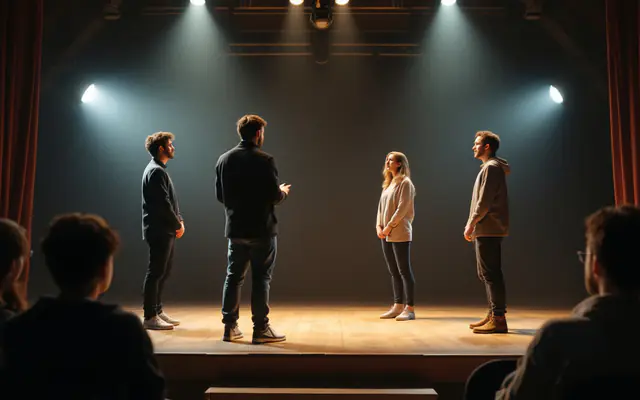
Mime Scheme of Work
(ages 11-12)
Overview
This six-lesson KS3 scheme develops core mime technique and physical theatre skills. Lessons progress from warm-up games and focused skill work (facial expression, gesture, mirroring, body language) to devising and a filmed or live group assessment set to music. The unit uses low-cost props and situation cards, a short PowerPoint definition slide, and encourages peer and self-evaluation. Designed for practical classroom delivery, it supports teachers with clear starters, development activities and plenaries for each lesson.
What Students Will Learn
Students will learn to communicate character, thought and feeling without speech by using exaggerated facial expressions, clear gestures, controlled body language, eye contact and use of space. They will practise mirroring, improvisation and devising short mime scenes, and learn how to 'mark the moment' in performance. The unit culminates in a group assessment interpreting mood and atmosphere to music and includes peer and self-evaluation.
Week 1: Facial Expressions
Introduces facial expression as a primary mime tool and revises KS3 drama skills. Activities include 'Chinese Mime Whispers' and frozen pictures using four chairs to develop clear mood-based expressions and class feedback.
Week 2: Gestures
Explores the purpose and clarity of gestures in mime and rehearses improvisation responses to objects. Students play 'Haybarn' and perform individual mime pieces with a stick/marker for class guessing.
Week 3: Body Language
Develops clear body language and exaggerated physical signals to convey intent without speech. Uses 'King of Silence' and paired mirroring exercises, then devises short playground mimes for performance and evaluation.
Week 4: Communicating a Thought or Feeling
Extends students' ability to convey thought and feeling using body, face and space, supported by a 'Definition of Mime' slide. Activities include a relay mime memory task, individual timed mimes and paired park-bench scenes.
Resources IncludePowerpoint SlidesDefinition of MimeWeek 5: Devising a scene in Mime
Applies mime techniques to devised group scenes and marking moments using props and situation cards. Students mime reactions to phone calls in a circle then develop group scenes combining dialogue and mime for key moments.
Resources IncludeResourcesSituation CardsWeek 6: Mime Assessment
Summative group assessment interpreting music through mime, demonstrating mood and atmosphere. Groups devise a piece set to chosen music, perform for peers and complete self-evaluation; optional filming supports assessment.
Resources IncludeMusicOne-eyed MaestroMonster Promenade
Add to your library
Build your drama scheme library
Add a complementary unit to your cart and check out in one secure payment.

(ages 13-14) · 6 lessons
Status and Tragedy
Understanding the role of hierarchical relationships in drama